At Nico Allen Infrastructure, safety is the foundation of our operations. As a responsible organization in the construction and infrastructure industry, we are committed to implementing best-in-class construction safety measures and infrastructure safety guidelines across all our projects. Our objective is to protect our workforce, ensure regulatory compliance, and deliver projects safely and efficiently.
A Strong Commitment to Workplace Safety
We prioritize workplace safety in construction by embedding safety into every stage of project planning and execution. Through structured construction risk management, hazard identification, and continuous supervision, we aim to eliminate unsafe conditions and promote a proactive safety culture.
Planning & Risk Assessment
Comprehensive risk identification and mitigation planning before project commencement
Safety Culture
Proactive safety mindset embedded across all organizational levels
Continuous Supervision
24/7 monitoring and supervision of all safety protocols
Personal Protective Equipment (PPE) Compliance
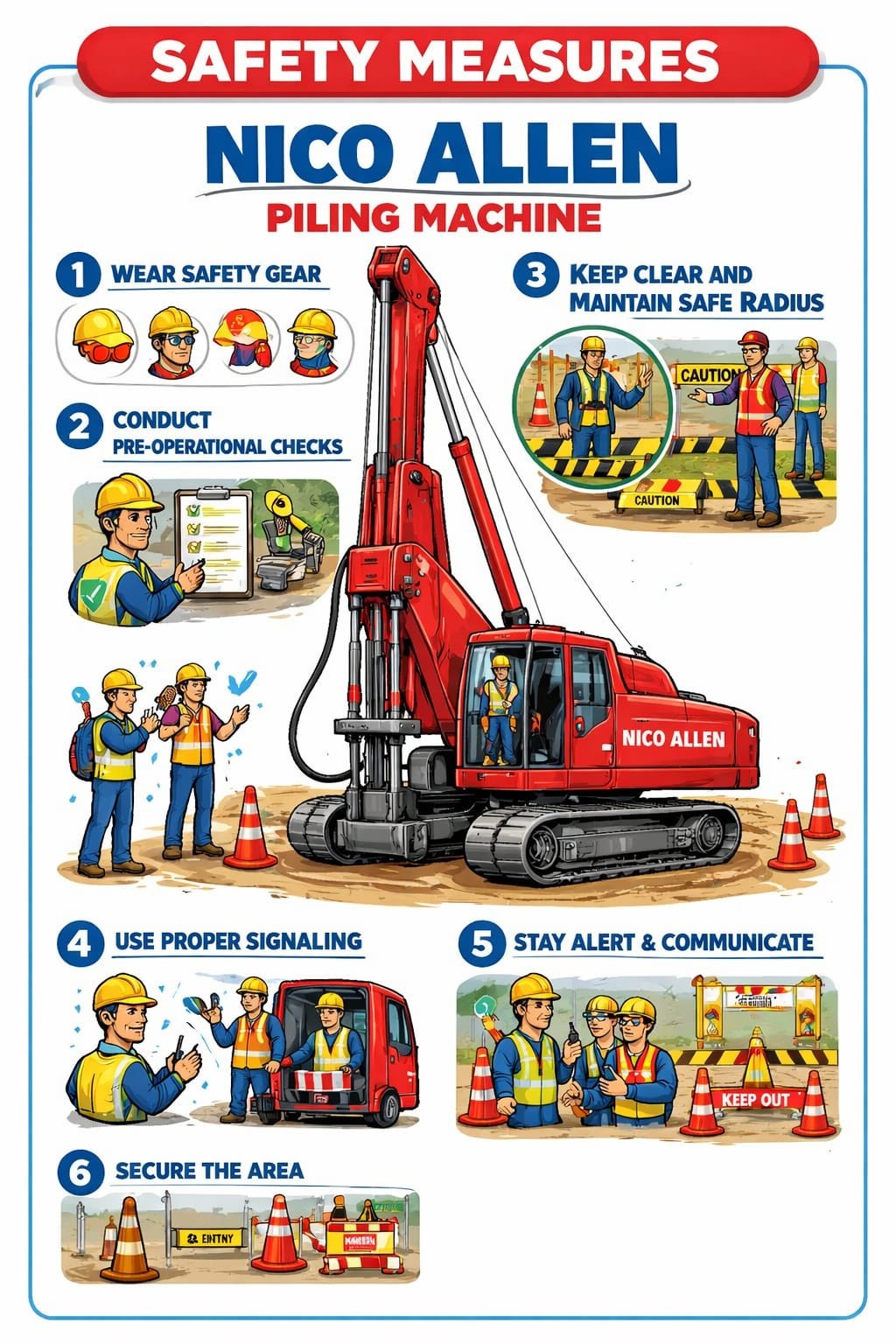
The use of PPE in construction is mandatory at all Nico Allen Infrastructure sites. Employees and visitors are required to wear safety helmets, safety shoes, high-visibility jackets, gloves, goggles, and safety harnesses for elevated work. These practices are essential for accident prevention in construction and maintaining a safe work environment.
Safety Helmets
Mandatory head protection for all site personnel
Safety Shoes
Steel-toe footwear for foot protection
Hi-Vis Jackets
High visibility clothing for all workers
Safety Goggles
Eye protection for hazardous operations
Industrial Gloves
Hand protection for various work activities
Safety Harnesses
Fall protection for elevated work
Zero Tolerance Policy
Nico Allen Infrastructure maintains a strict zero-tolerance policy for PPE violations. All personnel must comply with PPE requirements without exception.
Construction Site Safety Rules and Controls
All project locations strictly follow established construction site safety rules. Sites are secured with barricades, safety signage, and controlled access points. Regular housekeeping inspections are conducted as part of our worksite safety management system to prevent slips, trips, and falls.
Machinery, Equipment, and Operational Safety
In line with civil construction safety practices, all machinery and equipment undergo scheduled inspections and preventive maintenance. Only trained and authorized personnel are permitted to operate equipment, ensuring robust machinery and equipment safety and minimizing operational risks.
Work at Height and Excavation Safety Measures
High-risk activities such as working at height and excavation are managed with strict controls. Work at height safety measures include certified scaffolding, guardrails, safety nets, and lifeline systems. Excavation areas are properly shored, barricaded, and monitored in compliance with industrial safety measures.
Height Work Safety
- Certified scaffolding systems
- Guardrails and safety nets
- Lifeline and harness systems
- Competent personnel only
Excavation Safety
- Proper shoring and bracing
- Barricaded excavation areas
- Regular soil testing
- Continuous monitoring
Fire, Electrical, and Hazard Control
We enforce stringent fire and electrical safety in construction by providing fire-fighting equipment, proper electrical grounding, insulated tools, and safe wiring practices. Hot work activities are carried out only after risk assessment and approval to ensure full safety compliance.
Fire Safety Equipment
Fire extinguishers, hydrants, and alarms at strategic locations
Electrical Safety
Proper grounding, insulated tools, and safe wiring practices
Hot Work Permits
Mandatory permits and risk assessment for welding/cutting
Occupational Health and Environmental Safety (EHS)
Our occupational health and safety framework supports worker well-being through dust suppression, noise control, clean drinking water, sanitation facilities, and proper waste management. These initiatives reflect our commitment to environmental health and safety (EHS) standards.
Dust Suppression
Regular water sprinkling to control airborne particles
Noise Control
Monitoring and control of noise levels within permissible limits
Water & Sanitation
Clean drinking water and proper sanitation facilities
Waste Management
Proper segregation and disposal of construction waste
Safety Training and Awareness Programs
Continuous learning is key to safety excellence. Regular toolbox talks, inductions, and construction safety training programs are conducted to educate workers on hazards, safe work methods, and emergency response procedures.
Toolbox Talks
Daily safety discussions before work commencement
New Worker Induction
Comprehensive safety orientation for all new personnel
Specialized Training
Certification programs for high-risk operations
Refresher Courses
Regular updates on safety procedures and regulations
Emergency Preparedness and Safety Compliance
All sites are equipped with first-aid facilities, trained responders, and clearly defined evacuation plans. Adherence to health and safety policy construction requirements ensures full safety compliance in the construction industry and readiness for emergencies.
First-Aid Facilities
Fully stocked medical kits and trained first-aiders
Emergency Response
24/7 emergency contact and response teams
Evacuation Plans
Clearly marked exits and regular evacuation drills
Compliance Documentation
Complete safety documentation and audit trails
Our Safety Pledge
At Nico Allen Infrastructure, safety is a shared responsibility and a core business value. By following robust safety measures in infrastructure projects, maintaining high safety standards, and continuously improving our systems, we strive to achieve a zero-accident workplace and deliver sustainable infrastructure solutions.
Safety & Compliance Topics
Commitment to Safety Excellence
At Nico Allen Infrastructure, we believe that safety is not just a policy but a way of life. Our commitment to protecting our people and the environment is unwavering.